5-Star Rated
Licensed & Insured
Bilingual EN & ES
Tinley Park, IL & Nearby
Residential & Commercial
Will & Cook Counties

Heavy Duty Heating & Cooling • Serving Tinley Park, IL • (815) 212-7662

Commercial HVAC in Tinley Park, IL — Built for Crowds That Show Up All at Once

Tinley Park runs on events. The Convention Center — the Chicago Southland's largest — and the 28,000-capacity Credit Union 1 Amphitheatre pull sharp, predictable swings in foot traffic through nearby hotels, restaurants, and retail. That's a different HVAC problem than a storefront with steady daily traffic, and it needs equipment sized for the peak, not the average.

  • Licensed & Insured
  • Bilingual Service
  • Will & Cook Counties
Heavy Duty HVAC

Heavy Duty Heating & Cooling

Family-owned HVAC — City of Joliet H&V License #84735 • EPA 608 Universal.

  • ☎ (815) 212-7662
  • heavydutyheatingandcooling@gmail.com
  • Joliet, IL • Will & Cook Counties
5.0
Google Rating ★
28K
Amphitheatre Capacity
20+
Cities Served
100%
Bilingual
An Economy Built Around 28,000 Seats

Why Tinley Park's Commercial HVAC Problem Isn't Like Most Suburbs'

Tinley Park started in 1853 as the small settlement of Bremen and was incorporated as a village in 1892. Its population grew steadily through the late 20th century — 37,121 in 1990, jumping to 48,401 by 2000 — then kept climbing to 56,703 by 2010 before leveling off, and even dipping slightly to 55,971 by 2020. Unlike Frankfort or New Lenox, which are still in active growth mode, Tinley Park's residential base has largely matured. Its commercial pressure comes from somewhere else.

Two venues built a decade apart account for a lot of it. The Credit Union 1 Amphitheatre opened in 1990 and holds around 28,000 people on a full night — it's been through several names over the years (World Music Theatre, First Midwest Bank Amphitheatre among them), but the capacity and the crowds haven't changed. Then in 2000, the Tinley Park Convention Center opened as the Chicago Southland region's largest convention venue. Between the two, nearby hotels, restaurants, and retail can go from a quiet Tuesday to a fully booked event night with almost no ramp-up time.

That's a fundamentally different load profile than a typical suburban storefront with steady, predictable foot traffic. A rooftop unit sized for an "average day" either can't keep up when the amphitheatre or Convention Center fills up, or it's oversized and wasting energy every other night of the year. We size commercial systems around the actual peak occupancy a business sees — not a generic square-footage estimate — because in this town, the peak and the average aren't close.
Is Your System Ready for Event Nights?

Signs Your Commercial HVAC Wasn't Built for Occupancy Swings

Same RTU Since You Opened

If your rooftop unit was sized once and never reassessed against your actual event-driven traffic, it may be working harder than it should on your busiest nights.

Sized for Average Traffic, Not Peak

A system built around typical daily occupancy will struggle the moment a show or convention fills the building next door.

No Staged Capacity for Event Days

One large unit running flat-out year-round is often less efficient — and less reliable — than staged capacity that scales with demand.

Comfort Complaints Only on Show Nights

If problems only show up when the amphitheatre or Convention Center is busy, that's a sizing issue, not a random malfunction.

⚠️

Maintenance on a Generic Quarterly Schedule

A fixed calendar that ignores your actual event calendar can miss the exact weeks your system needs to be dialed in.

⚠️

No Backup Plan for a Mid-Event Failure

A rooftop unit going down during a sold-out night is a different kind of emergency than a slow afternoon at a quiet office.

Two Different Design Problems

Steady-State Commercial vs. Event-Driven Commercial

FactorTypical Steady-Traffic BusinessEvent-Driven Tinley Park Business
Sizing approachLoad calc against average daily occupancyLoad calc against peak event-night occupancy
Capacity designSingle unit sized to the spaceStaged or multi-unit capacity to scale with demand
Maintenance timingFixed quarterly scheduleTimed around known high-occupancy dates
Failure toleranceInconvenient, rarely urgentCan affect a packed house in real time
Ductwork/zoningUniform zoning across the spaceZoned for variable occupancy areas
Real Equipment, Real Rooftops

Commercial Rooftop Work Around Tinley Park

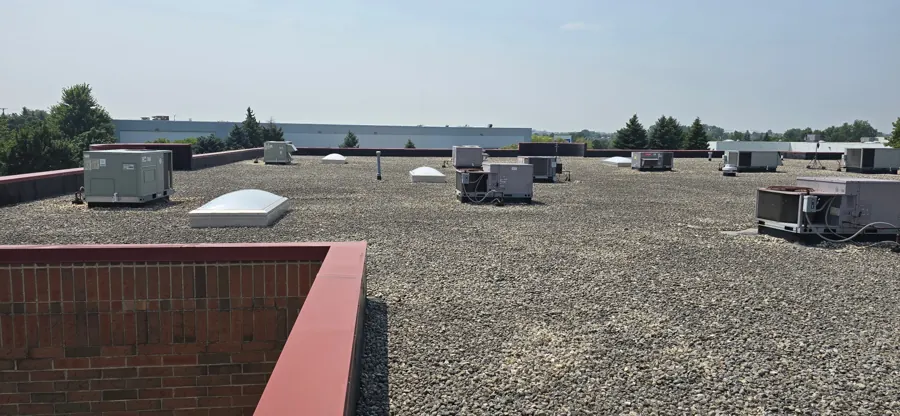
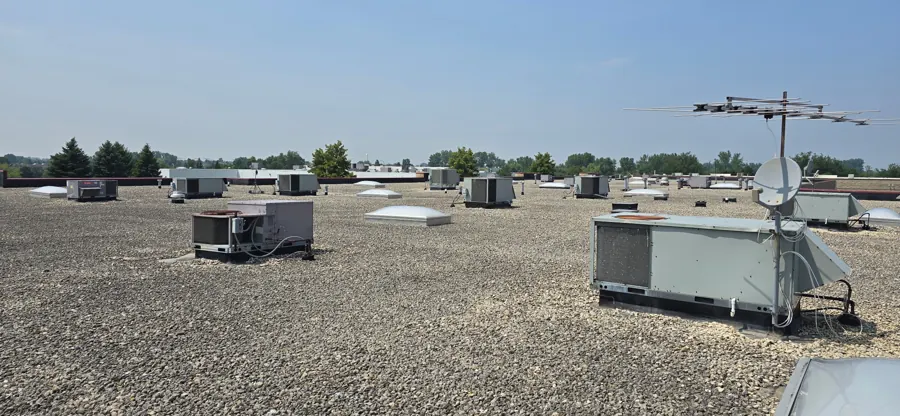
Two real service photos — not stock images — from rooftop commercial calls.

Packaged rooftop HVAC unit and ductwork on a flat commercial roof
A packaged rooftop unit on a flat commercial roof — the standard setup for hospitality and retail buildings in this area
Commercial rooftop with curb-mounted HVAC units in an industrial park setting
Rooftop curb-mounted units in a commercial park — this is where sizing for peak occupancy actually gets tested
Don't Wait for a Failure

Preventive Maintenance vs. Running to Failure

A rooftop unit that fails on a slow Tuesday is an inconvenience. The same failure on a sold-out amphitheatre night or during a full Convention Center weekend is a different problem entirely — lost business, upset customers, and an emergency call instead of a scheduled one. Preventive maintenance timed around your actual busy season costs less than an emergency repair, and it's the difference between catching a failing capacitor in a quiet inspection and discovering it mid-event.

FAQ

Frequently Asked Questions

What makes commercial HVAC different for a business near the Convention Center or the amphitheatre than for a typical Tinley Park storefront?

Most commercial HVAC in the suburbs is sized for steady, predictable traffic. A hotel, restaurant, or retail space near the Tinley Park Convention Center or Credit Union 1 Amphitheatre can swing from near-empty to full capacity on an event night, sometimes with 28,000 people at the amphitheatre alone. That kind of load swing needs equipment and controls sized for the peak, not the average — otherwise the system is either undersized on the busiest nights or oversized and inefficient the rest of the time.

Can a rooftop unit handle a packed convention hall or a sold-out show without failing?

It can, but only if it was sized and staged for that peak load in the first place. We run a load calculation based on maximum expected occupancy — not average daily traffic — and where it makes sense, we recommend staged or multi-unit capacity so the system can scale up for an event and back down afterward instead of running one oversized unit inefficiently year-round.

How fast can you respond if a unit goes down during an event week?

We prioritize commercial calls where a failure affects an active business, and we'll always give you a real, honest timeframe when you call rather than a vague promise. If you know your event calendar in advance, tell us — we can schedule preventive checks ahead of your busiest dates instead of reacting after something fails.

Do you offer maintenance scheduled around event calendars instead of a fixed quarterly visit?

Yes. For businesses whose traffic follows the Convention Center or amphitheatre schedule, a generic quarterly maintenance visit often misses the point — we'll work with you to time inspections ahead of your known high-occupancy dates instead of on a fixed calendar that ignores them.

What's the difference between a packaged rooftop unit and a split commercial system, and which is better for event-driven businesses?

A packaged rooftop unit (RTU) puts all the components in one cabinet on the roof — simpler to service and common for retail and hospitality buildings. A split system separates the components, which can allow more flexible zoning. For a business with sharp occupancy swings, we look at whether staged or multiple smaller RTUs would handle peak demand better than one large unit sized for the average day, and we'll walk you through the real tradeoffs before you decide.

Google Reviews

What Real Customers Say — 5.0 ★ on Google

Verbatim reviews from our Google profile — unedited. Read all 20 reviews on Google.

★★★★★

“I've had Angel come out twice for issues I've had with my AC, he's so quick to respond. Comes out same day or next day. Great communication. Fair price point. Goes in detail of what's wrong and how it could have gotten that way — and ways to fix. I feel like I've finally found a reliable AC team.”

— Kay Sig

Google review

★★★★★

“My AC was fixed within 2 hrs and still working great 2 yrs later. Thanks for also cleaning out my condenser so my cold air flows much better and the quick response.”

— Matthew Brow

Google review

Service Area

From Joliet to Tinley Park, Commercial HVAC Done Right

Tinley Park is about 19 miles from our Joliet base via I-80 — roughly a 30-minute drive.

  • Tinley Park, IL
  • Orland Park, IL
  • Mokena, IL
  • Frankfort, IL
  • Oak Forest, IL
  • New Lenox, IL
  • Joliet, IL

Request a Commercial HVAC Quote

⭐ Google Review