5-Star Rated
Licensed & Insured
Bilingual EN & ES
Lemont, IL & Nearby
Residential & Commercial
Will & Cook Counties

Heavy Duty Heating & Cooling • Serving Lemont, IL • (815) 212-7662

Furnace Installation in Lemont, IL — Sized for Stone, Not Just Square Footage

Lemont's historic downtown was built from local limestone quarried right along the Des Plaines River — the same "Athens Marble" that built Chicago's Water Tower. Solid stone walls hold heat differently than wood-frame construction, and a furnace sized off square footage alone often misses that. We run a real load calculation on the house you actually have, whether it's 170 years old or new construction on a hillside lot.

  • Licensed & Insured
  • Bilingual Service
  • Will & Cook Counties
Heavy Duty HVAC

Heavy Duty Heating & Cooling

Family-owned HVAC — City of Joliet H&V License #84735 • EPA 608 Universal.

  • ☎ (815) 212-7662
  • heavydutyheatingandcooling@gmail.com
  • Joliet, IL • Will & Cook Counties
A Town Built From Its Own Bedrock

Why Furnace Sizing in Lemont Isn't a Generic Calculation

Lemont's first settlers arrived in 1833 along the route of the Illinois & Michigan Canal, and during construction workers found an exceptionally fine grade of dolomite limestone close to the surface. From roughly 1850 to 1900, that stone — known as Athens Marble or Joliet-Lemont limestone — became a major building material, used in structures as far away as the Chicago Water Tower and Holy Name Cathedral. Lemont was incorporated in 1873, and today the Lemont Downtown Historic District, listed on the National Register of Historic Places in 2016, still has 38 buildings built from that local stone, including the Old Stone Church from 1861.

Solid limestone walls have real thermal mass — they resist temperature swings and hold heat or cold longer than a typical wood-frame wall. But mass isn't the same thing as insulation. Uninsulated masonry has a genuinely poor R-value on its own by modern standards, even though it feels solid and substantial. A furnace sized purely off a home's square footage, without accounting for how those stone walls actually perform, tends to run short in exactly the rooms built against the original exterior stone.

Lemont's geography adds another layer: the village sits on a hillside along the south bank of the Des Plaines River, overlooking the bluffs of Waterfall Glen. Homes built into that terrain sometimes have a walkout lower level with more exposed wall area than a standard basement — another detail that changes the real heat-loss picture, whether the house is original stone or built decades later.

Is Your Furnace Sized Correctly?

Signs a Lemont Furnace Wasn't Sized for the Actual House

Home Built or Renovated With Original Limestone Walls

Common near Lemont's historic downtown — stone construction changes how a load calculation should be done.

Rooms Along the Stone Exterior Run Colder

If comfort drops noticeably in rooms against an original exterior wall, that's a sign the sizing didn't account for the wall type.

Furnace Was Sized Off Square Footage Alone

A generic per-square-foot estimate is a starting point, not a substitute for checking the actual rooms and walls.

Hillside Lot With a Walkout Lower Level

More exposed wall area than a standard basement changes how that level loses heat compared to the floors above it.

⚠️

No Insulation Upgrade Since Construction

Especially relevant in older stone homes, where the walls themselves were never designed around modern insulation standards.

⚠️

Furnace Short-Cycles or Runs Nonstop

Both can point to a mismatch between the equipment size and how the actual house behaves, not just its age.

Two Wall Types, Two Load Calculations

Stone Construction vs. Standard Wood-Frame Construction

FactorStone/Masonry (Lemont Historic Core)Standard Wood-Frame
Thermal massHigh — resists temperature swingsLow — responds quickly to the thermostat
Insulation on its ownOften minimal by modern standardsBuilt around modern batt or spray-foam standards
Load calculationMust account for masonry behavior room by roomStandard square-footage estimate is usually close
Ductwork routingOften retrofit through chases, not the original wallsBuilt into wall and floor cavities from construction
If undersizedLong, uneven recovery after a cold snapFrequent short-cycling
5.0
Google Rating ★
1873
Lemont Incorporated
20+
Cities Served
100%
Bilingual
Real Equipment, Real Installs

Furnace Work Around Lemont

Two real photos from our own installations and service calls — not stock images.

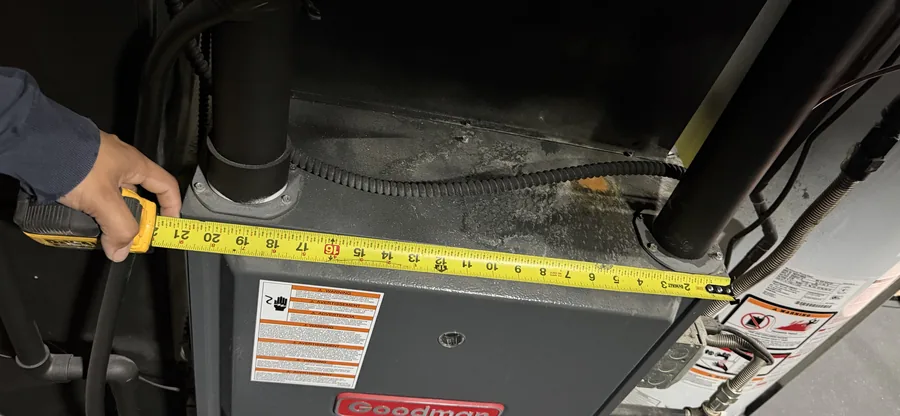
Technician measuring furnace and air handler dimensions before installation
Measuring the mechanical closet before sizing a replacement — not guessing off a spec sheet
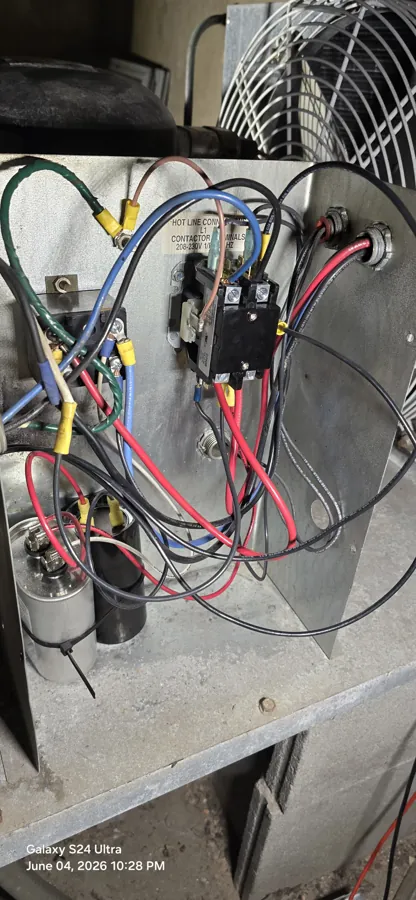
Furnace control wiring and components exposed during service
Furnace wiring and controls checked during installation and service
FAQ

Frequently Asked Questions

Does a stone or limestone home in Lemont need a different furnace than a typical wood-frame house?

The furnace itself isn't a different product, but the load calculation behind it should be. Solid limestone walls have real thermal mass — they hold heat and cold longer than a wood-frame wall — but on their own, uninsulated masonry has a poor R-value compared to modern construction. A furnace sized off square footage alone, without accounting for how that stone actually performs, is a common way to end up with an undersized or unevenly distributed system.

Will running new ductwork or gas lines damage the limestone walls in a historic Lemont home?

It can, if it's not planned carefully. Cutting new chases through solid limestone is a different job than running lines through wood-frame wall cavities, so we look for existing chases, floor cavities, or closet runs first and route around the original stone wherever possible instead of cutting into it by default.

Why does a "properly sized" furnace still leave some rooms cold in an older Lemont home?

Usually because the sizing was based on total square footage rather than a room-by-room load calculation. Rooms along an original exterior stone wall lose heat differently than interior rooms or newer additions, and a generic sizing rule doesn't catch that. We check individual rooms, not just the total footprint, before recommending a size.

I live on a hillside lot near the Des Plaines River — does that affect furnace sizing?

It can. Homes built into Lemont's hillside terrain along the river sometimes have a walkout lower level with more exposed wall area than a typical basement, which changes its heat loss compared to the floors above it. We factor that into the load calculation rather than treating every level of the house the same.

How long does a furnace installation take in an older Lemont home versus a newer one?

A straightforward replacement in a newer home with existing ductwork is usually a one-day job. An older home near the historic downtown, especially one needing new duct routing through masonry construction, can take longer — we'll give you a real timeline after we've actually seen the house, not a generic estimate.

Google Reviews

What Real Customers Say — 5.0 ★ on Google

Verbatim reviews from our Google profile — unedited. Read all 20 reviews on Google.

★★★★★

“I've had Angel come out twice for issues I've had with my AC, he's so quick to respond. Comes out same day or next day. Great communication. Fair price point. Goes in detail of what's wrong and how it could have gotten that way — and ways to fix. I feel like I've finally found a reliable AC team.”

— Kay Sig

Google review

★★★★★

“My AC was fixed within 2 hrs and still working great 2 yrs later. Thanks for also cleaning out my condenser so my cold air flows much better and the quick response.”

— Matthew Brow

Google review

Service Area

From Joliet to Lemont, Furnace Installs Done Right

Lemont is about 14 miles from our Joliet shop, roughly a 20 to 25-minute drive via Route 171 or 127th Street.

  • Lemont, IL
  • Homer Glen, IL
  • Lockport, IL
  • Romeoville, IL
  • Downers Grove, IL
  • Joliet, IL

Request a Furnace Installation Quote

⭐ Google Review